
Performance is engineered into every layer.
A simplified technical experience based on the technology themes already present in Philadelphia Solar’s existing site: bifacial design, half-cut architecture, large-wafer formats and long-term reliability.
Half-Cut Cell Technology
Cell segmentation is used to reduce resistive losses and support stronger module performance under demanding operating conditions.
Bifacial Architecture
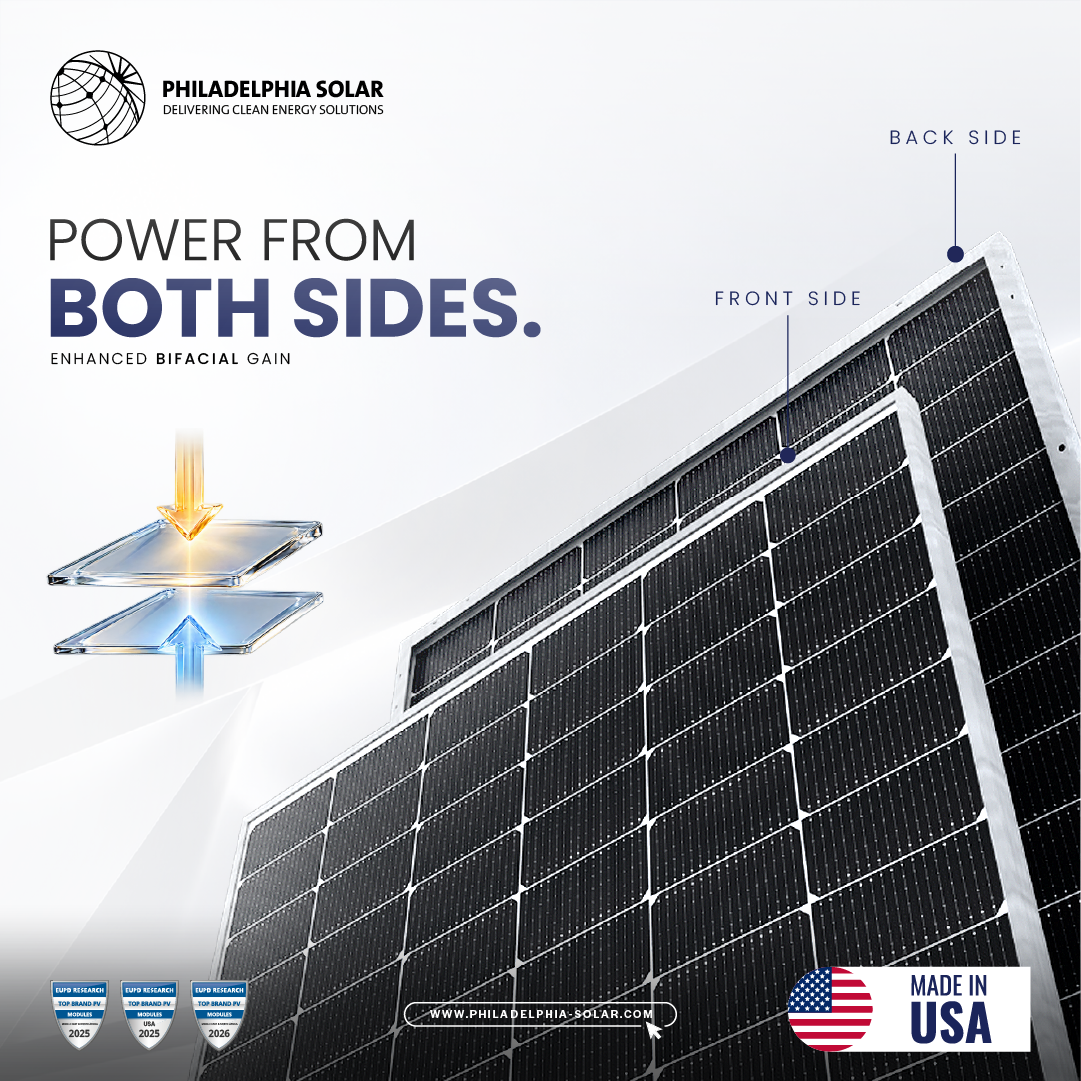
Rear-side collection can add energy yield when system design and ground conditions support reflected irradiance.
Large-Wafer Formats
M10/G12-oriented module architectures support higher output classes and project-scale economics.
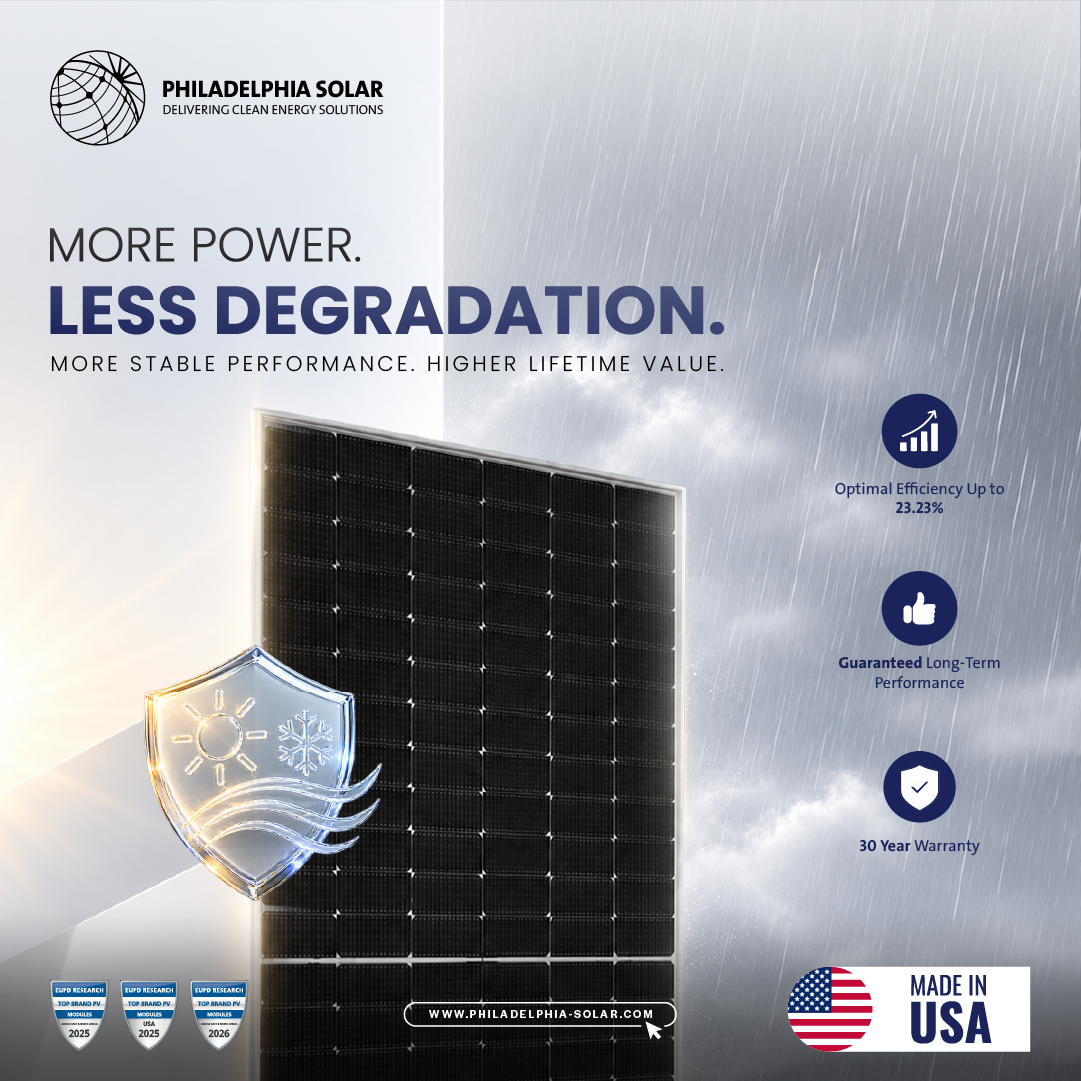
Low Degradation
Long-term power retention is central to project value and lifecycle performance.
Mechanical Durability
Module design considers structural resilience, transport, installation and environmental exposure.
Quality Control
Consistent manufacturing, inspection and documentation support predictable field performance.
Power from both sides.
Bifacial design is one of the clearest technology messages for the U.S. site because it connects module architecture directly to energy-yield potential.
More power. Less degradation.
The U.S. technology story should show buyers how module performance translates into lifetime project value—not just a nameplate wattage on day one.